
Telemetry systems for
electric motors
Contactless transmission of measurement data and power to rotating parts inside electric motors.
For precise torque and temperature measurement directly on the rotor or on other rotating parts.
In an electric motor the interference field is the problem, not the measurement itself.
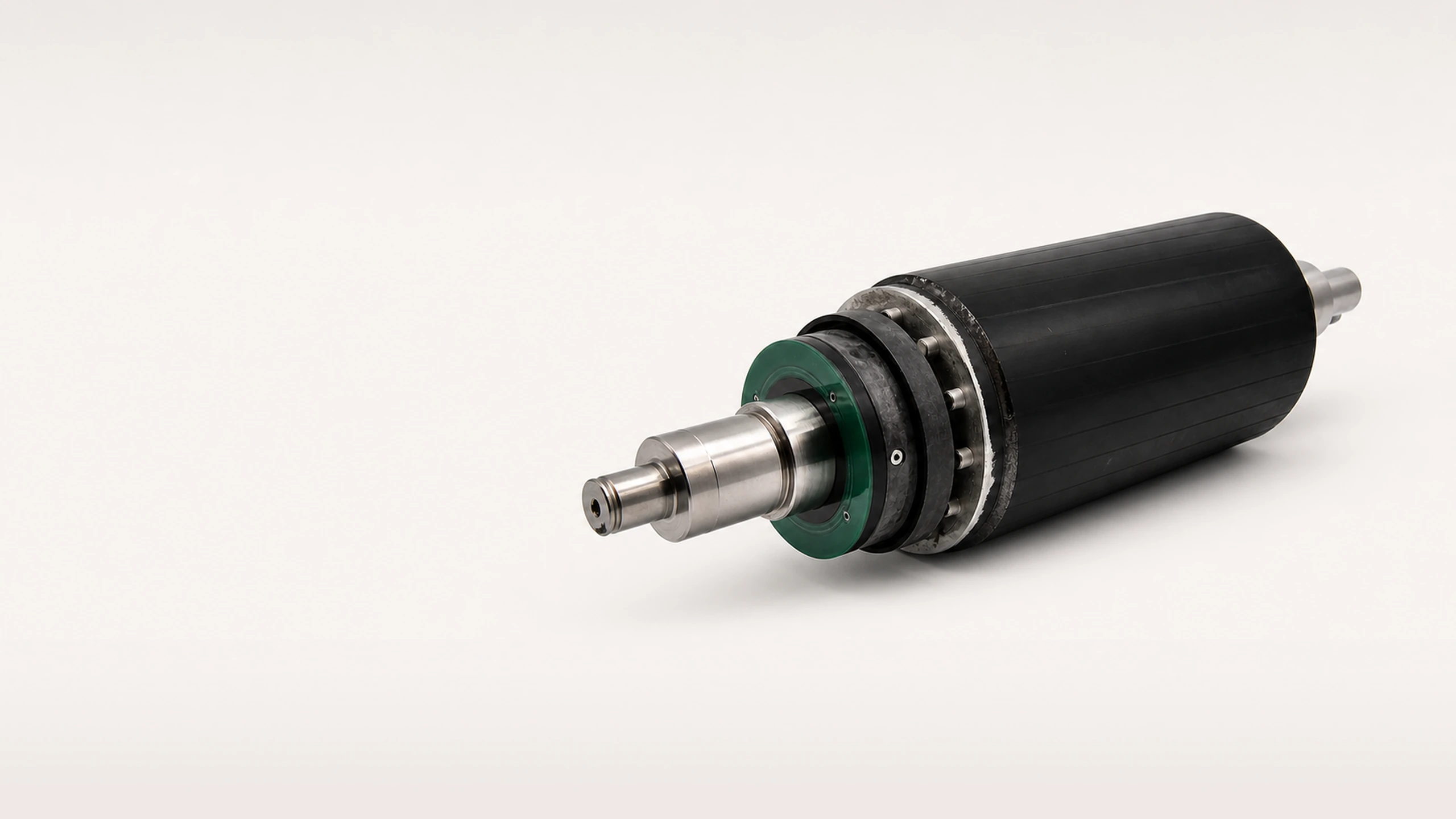
Melectric measuring systems transmit measurement data and power contactlessly to the rotating shaft parts inside electric motors. That allows precise torque or temperature measurement directly at the rotor windings or on other rotating parts, with no mechanical interfaces and no fault-prone cable connections.
The extremely rugged design keeps measurement clean even under the most demanding EMI/EMC conditions, which is exactly what prevails inside an electric motor. Modern signal processing holds the accuracy even when electromagnetic interference is strong.
Torque measurement in electromagnetic interference fields
| Feature | Value |
|---|---|
| Extended sensing options | Besides torque, the system can also capture temperatures directly at the rotor |
| Signal bandwidth | Standard 1 kHz, optionally up to 10 kHz |
| Temperature range | −40 to 125 °C |
| High interference immunity | Against electromagnetic influences, through a specially shielded system |
| Torque measuring range | adjustable to the customer and applicable even at very high stiffness. |
Measuring points on an electric motor
Typical measuring tasks solved with this series. The list is not exhaustive.
E-mobility & automotive:
- Direct torque measurement in the rotor of drive machines
- Optimising power control or tracing faults
- Detailed analysis of efficiency and power losses
- Temperature measured directly on the rotor, alongside torque
Industry & drive technology:
- Condition monitoring of electric motors in production plant
- Early detection of wear and irregularities
- Integration into geared motors for performance monitoring
- Temperature monitoring in operation, with no second measuring chain
Shielding and signal quality
Contactless transmission
No mechanical interfaces and no wearing parts
Rugged design
Built for extreme conditions
Measuring accuracy
Extremely low signal noise, even in an interference field

Technical enquiry about your application.
Torque range, speed, installation space and ambient conditions are enough for a first design proposal.